

Study: almost all viral K-beauty TikToks make a misleading claim
Dermatologists reviewed 38 popular Korean skincare and glass skin videos. Most skipped skin type, stacked actives and left out sunscreen. What to keep instead.
Reported by The National and European Academy of Dermatology and Venereology, with BeautyDump's US prices and take.
Published
We may earn a commission from retailer links. How we work
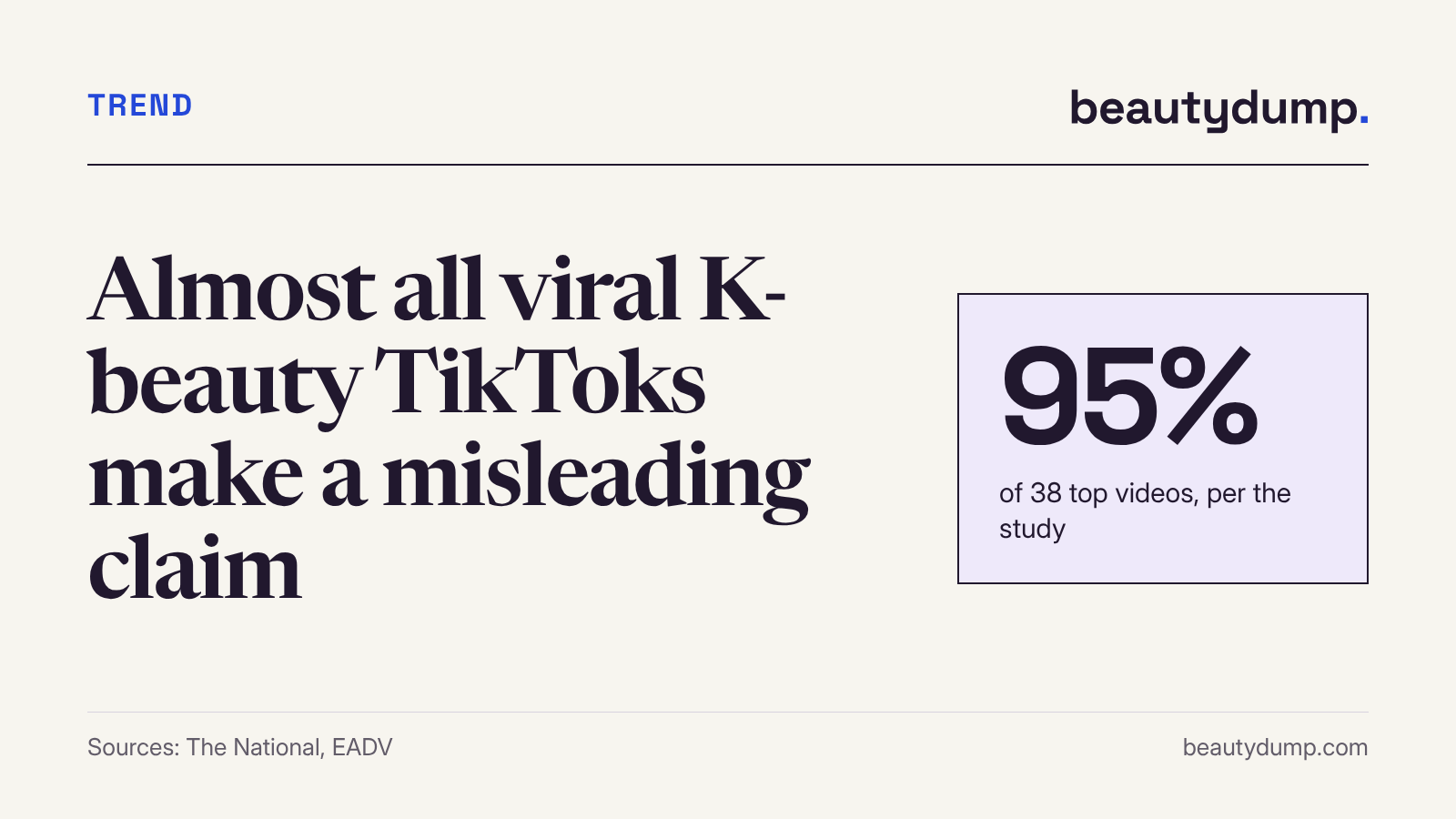
Nearly every popular TikTok video about Korean skincare and "glass skin" contains at least one misleading claim, according to a study that The National revisited on November 18 as viral routines keep growing longer.
The research, led by a dermatology resident in Rio de Janeiro and presented at the EADV Congress in Vienna on September 30, looked at 38 top videos collected in May from a fresh account. By the researchers' count, about 95% made a potentially misleading claim, 84% ignored differences in skin type, 45% pushed combinations of active ingredients without safety advice and 32% promised instant results. Only one video mentioned irritation and only two mentioned sun protection. None were made by dermatologists.
The authors say Korean skincare itself isn't the problem: the basics of gentle cleansing, hydration and barrier care get turned into one-size-fits-all routines.
This was a small sample of videos, presented at a conference rather than in a full journal paper, so treat the percentages as a snapshot, not a census.
Where we agree: sunscreen is the step viral routines skip most, and it's the one that matters most. Korean sunscreens sold in the US are made to US rules, so look for the US version and buy from the brand's store or an authorized retailer.
Where we'd add nuance: a short routine isn't automatically "safe" and a long one isn't automatically harmful. The risk is the actives: introduce one at a time and patch-test first, especially if your skin is sensitive. A cleanser, a moisturizer and a sunscreen you'll actually wear cover most of what the study says videos leave out:


Sources
- The National (Nov 18, 2026)
- European Academy of Dermatology and Venereology (Sep 30, 2026)