

Nearly half of US K-beauty buyers now come back for more
Numerator data cited by Seoul Economic Daily puts the US K-beauty repeat-purchase rate at 48%, up from 26% in 2020. What that means for prices and where to buy.
Reported by Seoul Economic Daily, with BeautyDump's US prices and take.
Published
We may earn a commission from retailer links. How we work
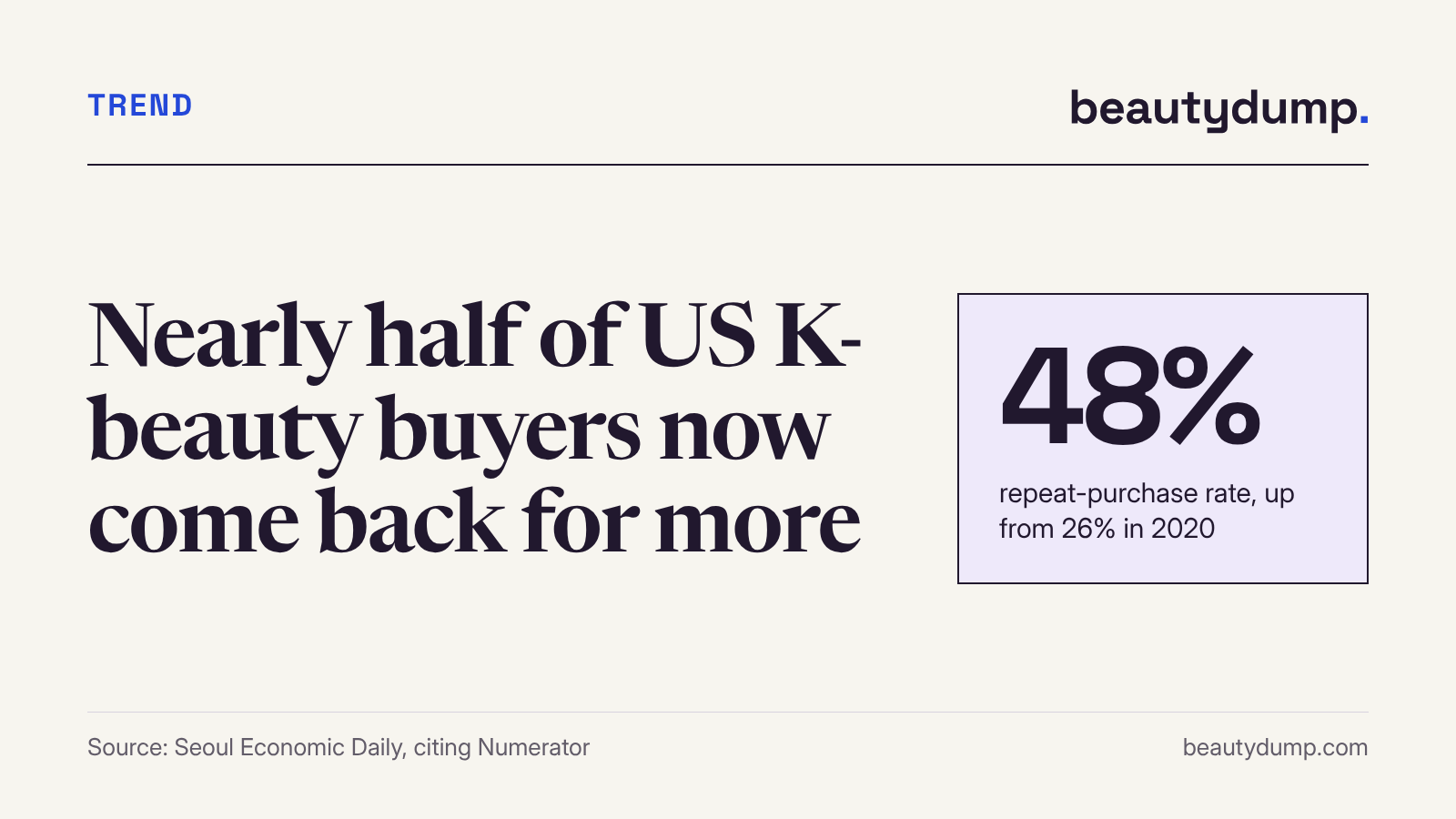
Almost half of Americans who buy Korean beauty products now buy again, Seoul Economic Daily reports, citing figures from the US shopper-data firm Numerator. The repeat-purchase rate reached 48% in 2026, up from 26% in 2020.
The reach has grown too. According to the same data, about one in four US households (25%) has bought a K-beauty product, up from 8% in 2020. US sales of K-beauty skincare rose 51% in the year to the first quarter of 2026, which the paper says is about five times the growth of skincare overall, and more than half of that came from existing buyers spending more. Skincare makes up 91% of US K-beauty sales, led by moisturizers, serums and toners, and 44% of sales happened on Amazon.
The paper points to brands that turned viral moments into steady sales: Anua, whose heartleaf cleansing oil took off on TikTok and which it says is now a top-five skincare brand at Ulta, and Medicube, whose Zero Pore Pad it says ranked first in Amazon's beauty category for two quarters this year.
We agree with the paper's point that TikTok finds new buyers while Amazon and stores keep them. In our own price tracking, the same bestseller is often listed at the brand's site, Ulta and Target at once, and not always at the same price on the same day.
Where we'd add a caution: 44% of sales on Amazon also means a lot of third-party listings for the most popular items. For a product you rebuy, check that the Amazon seller is the brand or Amazon itself, or buy from the brand or an authorized store. Here are today's US prices for Anua's heartleaf cleansing oil and the mild version of Medicube's Zero Pore Pad:

 23% off
$24.00$31.00
at medicubeSources
- Seoul Economic Daily (more from Seoul Economic Daily) (Nov 21, 2026)